How AI Drug Interaction Detection is
Preventing Adverse Events in Hospitals
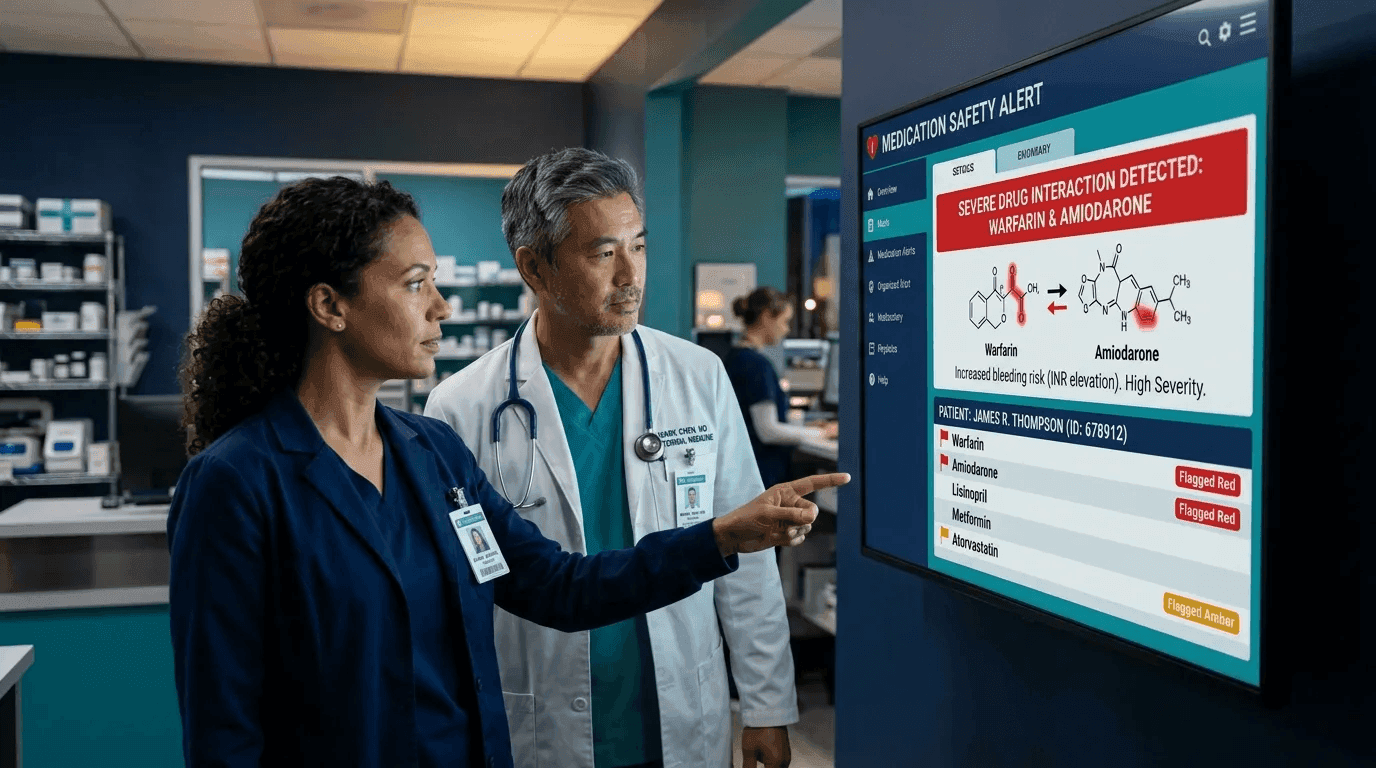
Adverse Drug Events (ADEs) are among the most preventable causes of patient harm in hospitals worldwide. In India alone, medication errors contribute to an estimated 5–10% of all hospital adverse events. AI-powered drug interaction detection is changing this — and the numbers from careup.ai's network in 2024 tell a compelling story.
The Scale of the Problem
A doctor prescribing for a complex patient — managing diabetes, hypertension, a recent cardiac event, and an infection — may be writing 8–12 drugs simultaneously. Manually checking every drug-drug interaction against a pharmacopoeia is simply not feasible at the pace of a busy OPD. Studies show that doctors catch only 20–30% of clinically significant drug interactions without decision support tools.
The consequences of missed interactions range from reduced drug efficacy to life-threatening toxicity. AI doesn't replace clinical judgment — it ensures that no interaction is missed.
careup.ai Drug Interaction Detection — 2024 Network Data
How the AI Drug Interaction Module Works
When a doctor adds a new drug to a patient's prescription, careup.ai's AI instantly cross-references it against the patient's complete current medication list, the patient's clinical context (renal function, hepatic status, age, weight, pregnancy status), and a database of 40,000+ known drug interactions updated in real time from pharmacological literature.
If an interaction is detected, an alert fires in under 300 milliseconds — before the prescription is saved. The alert includes the severity level, the mechanism of interaction, the clinical risk, and suggested safe alternatives — giving the prescribing doctor immediate, actionable information.
4-Tier Severity Classification
Potentially life-threatening combinations requiring immediate intervention — e.g. warfarin + aspirin at high doses, MAO inhibitors + SSRIs.
Significant interactions that may require dose adjustment or close monitoring — e.g. metformin + contrast agents, ACE inhibitors + potassium-sparing diuretics.
Interactions worth monitoring that may require therapeutic adjustment in specific patient populations or co-morbidity contexts.
Low clinical significance interactions documented for completeness — physician informed but typically no action required.
Special Populations: Where AI Makes the Biggest Difference
Drug interaction risk is highest in patients with complex comorbidities, renal or hepatic impairment, elderly patients on polypharmacy, and pregnant or breastfeeding women. careup.ai's AI modulates interaction severity based on patient-specific risk factors — a moderate interaction in a healthy adult may be flagged as critical in a patient with renal failure.
This context-aware intelligence is what distinguishes genuine AI-powered drug safety from a basic drug reference lookup.
Impact on Prescription Workflow
A concern sometimes raised about drug interaction alerts is “alert fatigue” — when so many minor alerts fire that clinicians begin dismissing all alerts, including critical ones. careup.ai's AI is calibrated to surface only clinically meaningful alerts, with minor interactions logged silently for audit without interrupting workflow. In practice, careup.ai customers report a 94% alert acceptance rate for critical interactions — far above industry averages — because doctors trust the signal quality.
See AI drug safety in action
Book a live demo and see how careup.ai's AI flags drug interactions in real prescribing workflows.
Book a DemoConclusion
AI drug interaction detection is not a luxury feature — it is a patient safety imperative for any hospital operating at scale. With 12,000+ adverse events flagged across its network in 2024 alone, careup.ai demonstrates that AI-powered medication safety works in real Indian hospital conditions. Every prescription that fires a critical alert and is changed before reaching the patient is a patient harm prevented.
See AI Drug Safety Live
Watch careup.ai detect real drug interactions in a live prescribing demo.
Not ready for a demo yet?
Related Articles
Protect Your Patients with AI Drug Safety
Join hospitals that have prevented thousands of adverse drug events with careup.ai.
Book Your AI Safety Demo
See real-time drug interaction detection and the 4-tier alert system in a live demo.
Not ready for a demo yet?